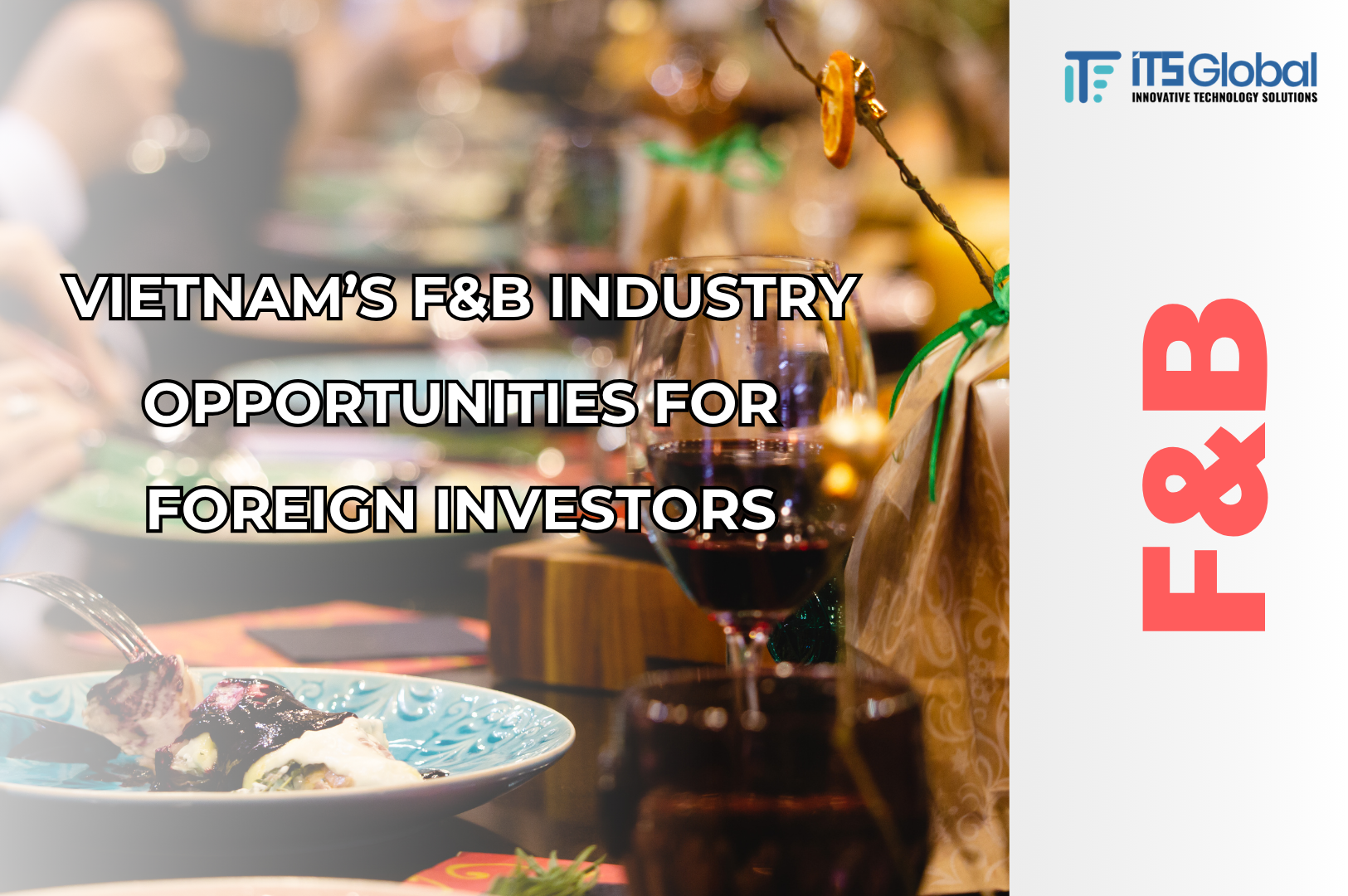
The Food & Beverage (F&B) industry in Vietnam is experiencing a strong growth phase, creating numerous opportunities for foreign investors in 2025. Below are the latest updates and emerging trends:
1. Revenue Growth
Vietnam’s Food & Beverage (F&B) industry has continued to record significant growth in recent years.
According to a report by Euromonitor, the Vietnamese F&B market in 2024 is projected to reach a value of VND 655 trillion, representing a 10.92% increase compared to 2023. This notable growth reflects strong market attractiveness, driven by economic recovery after the COVID-19 pandemic and rising domestic consumption demand. This data is also confirmed by the Ministry of Industry and Trade of Vietnam, indicating high reliability of the forecast.
In the first six months of 2024, total industry revenue reached VND 403.9 trillion, equivalent to 68.46% of the total revenue of 2023. This demonstrates rapid and stable growth, as the industry achieved nearly 70% of the previous year’s total revenue within just half a year. These figures reflect the recovery of domestic consumption demand, particularly in segments such as restaurants, coffee shops, and online food delivery services.
With a projected growth rate of 10.92%, Vietnam’s F&B industry is opening up many opportunities for foreign investors. This development is driven not only by domestic consumption but also by the expansion of franchising models and international investments, especially in the clean and organic food segments, which are becoming global trends.
2. Consumer Trends
2.1. Vietnamese Consumers Spend Heavily on Food and Beverages
According to Viet Finance News, Vietnamese consumers currently spend approximately 35% of their monthly income on food and beverages, the highest among all personal spending categories. This includes both at-home consumption and dining services such as restaurants, cafes, and online food delivery.
F&B Market Value Forecast:
With steadily increasing spending trends, Vietnam’s F&B industry is expected to reach approximately USD 700 million in value by 2025. This growth is driven by:
- Rising average income, especially in major cities such as Hanoi, Ho Chi Minh City, and Da Nang
- Growth of a young population and middle class willing to spend more on high-quality products and services
2.2. The Rise of Gen Z and the Middle Class
Gen Z (1997–2012):
This generation, accounting for nearly 20% of Vietnam’s population, is reshaping the F&B industry with distinct consumption behaviors:
- Preference for new and creative products: Gen Z is attracted to unique flavors, visually appealing packaging, and distinctive brand stories
- Willingness to pay for experiences: Instead of focusing solely on price, Gen Z values dining experiences, including ambiance, customer service, and social media interaction
- Increasing demand for modern beverages: Products such as milk tea, specialty coffee, and cold-pressed juices are highly popular, creating a promising new market for F&B businesses
Middle Class:
This is the fastest-growing consumer group in Vietnam, with steadily increasing income. They typically:
- Prioritize quality over quantity in food consumption
- Pay close attention to health factors and product origins, favoring organic, chemical-free, and minimally processed foods
- Are willing to pay higher prices for premium dining services or reputable brands
3. Digital Transformation and E-commerce in Vietnam’s F&B Industry
Digital transformation and e-commerce have become key drivers of growth in Vietnam’s F&B sector. Below are the details:
3.1. Revenue and Growth of Online Food Delivery
According to Vietstock, Vietnam’s online food delivery market generated VND 52.4 trillion in revenue in 2023, marking a 20.18% increase compared to 2022. This reflects a growing consumer preference for convenience, especially after the COVID-19 pandemic.
Major platforms such as GrabFood and Shopee Food play a crucial role in expanding the market. These platforms not only provide delivery services but also integrate features such as reviews, food recommendations, and promotional offers, enhancing the overall user experience.
3.2. Digital Transformation Trends in the F&B Industry
a. Integration of Cashless Payments
According to the State Bank of Vietnam, the proportion of consumers using cashless payments at F&B outlets reached 61.4% in 2024. These methods include bank transfers, QR code payments, and e-wallets such as MoMo and ZaloPay.
Businesses adopting cashless payments not only reduce operational costs but also attract younger, tech-savvy customers.
b. Automation of Business Operations
Many restaurants and cafes in Vietnam are implementing POS (Point of Sale) systems to optimize processes from ordering and payment to inventory management. This helps increase service speed and minimize errors.
Service robots are also gradually being introduced in some large restaurant chains, creating a technological highlight and unique customer experience.
c. Customer Data Analytics
F&B businesses are leveraging Big Data and AI (Artificial Intelligence) to analyze customer behavior, enabling them to recommend suitable products and personalize the customer experience.
For example, AI applications can predict consumption trends, helping restaurants prepare ingredients more accurately and reduce waste.
4. Opportunities for Foreign Investors in Vietnam’s F&B Industry
Vietnam’s Food & Beverage (F&B) industry offers highly attractive opportunities for foreign investors thanks to its strong growth potential and diverse consumer trends. Below are the key highlights:
4.1. Vietnam – A Promising Investment Destination
Outstanding Growth Potential:
According to the Business Forum, Vietnam is expected to become one of the fastest-growing F&B markets over the next five years. This is driven by:
- Stable economic growth: GDP growth remains at 6–7% annually, creating favorable conditions for market expansion
- Large population size: With nearly 100 million people, Vietnam is one of the largest domestic markets in Southeast Asia. The middle class is growing rapidly, projected to reach 44 million people by 2025, boosting demand for high-quality food products
- Open investment policies: The Vietnamese government is encouraging foreign investment through incentives and administrative reforms
4.2. Advantages for Foreign Investors
- High consumer demand: Vietnamese consumers spend about 35% of their income on food and beverages, the highest rate in Southeast Asia
- Untapped market potential: Compared to developed countries, Vietnam’s F&B industry still has many underdeveloped segments, particularly in organic food, premium processed food, and online food delivery services
- Support from digital transformation: E-commerce platforms and cashless payment systems make it easier for investors to enter the market. Food delivery apps such as GrabFood and Shopee Food have created a supportive ecosystem for new businesses
Conclusion
Vietnam’s Food & Beverage (F&B) industry is not only a dynamic market but also offers significant investment opportunities for international businesses, thanks to its rapid growth, evolving consumer trends, and strong technological support.
With a large population, high consumption demand, and the rapid development of e-commerce and digital transformation, Vietnam is an ideal destination for investors seeking a promising new market. Understanding modern consumer trends and leveraging government investment incentives will be key for foreign F&B businesses to expand and succeed in Vietnam in the coming years.
Partnering with ITS Global means more than adopting optimized technology solutions—it means unlocking a pathway to breakthrough growth.
We are at the forefront of Flutter Development and Hybrid App Development, delivering high-performance, cross-platform applications that scale with your business. Backed by deep expertise in SAP Consulting and ERP implementation, ITS Global also leads digital transformation (DX) initiatives for the logistics and F&B sectors, enabling enterprises to accelerate growth, optimize customer experience, and strengthen their market position.
Contact us today to receive tailored consulting and prepare your business for the next leap forward in the digital transformation era.
#FlutterDevelopment #HybridAppDevelopment #SAPConsulting #LogisticsSolutions #FBSolutions