Shifting dynamics and Vietnam’s emerging role
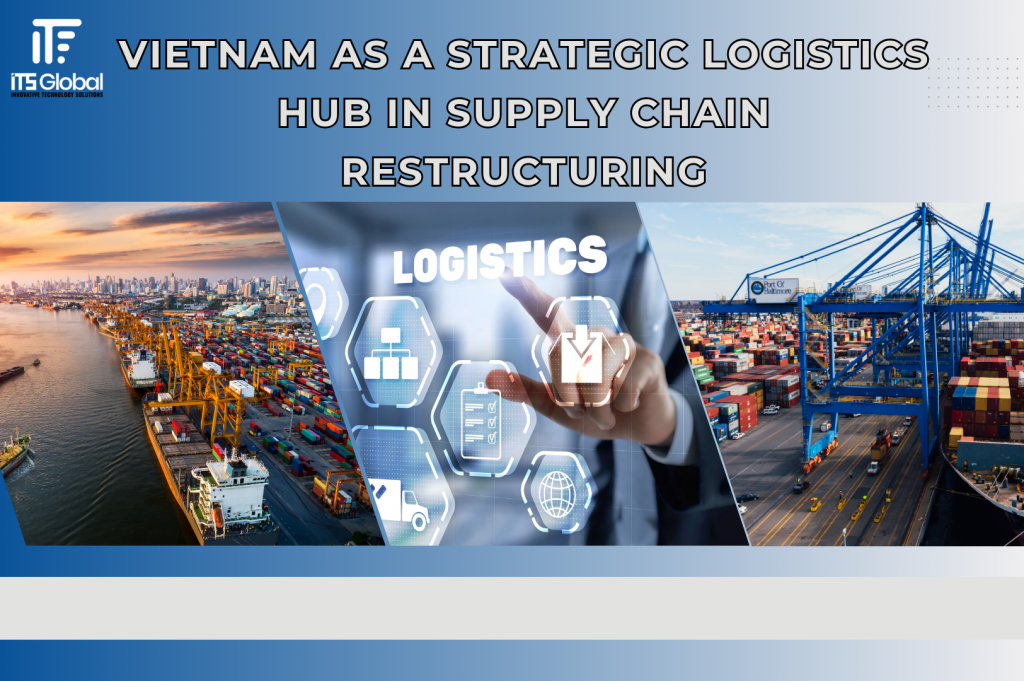
Amid escalating U.S.–China trade tensions, the relocation of manufacturing away from China is gaining unprecedented momentum. Global companies are adopting the “China+1” strategy to diversify supply chains, reduce geopolitical risks, and optimize production costs. In this wave of restructuring, Vietnam is emerging as a strategic choice, positioning itself as a new manufacturing and logistics hub in Asia.
Vietnam’s favorable geographic location, young workforce, competitive costs, and strong trade-liberalization policies have made it an important link in the global supply chain network. The signing and implementation of next-generation free trade agreements such as CPTPP, EVFTA, and RCEP have not only expanded export markets but also accelerated the need to strengthen logistics capacity — a critical factor in increasing trade efficiency and enhancing national competitiveness.
Current challenges – Investment potential
Vietnam’s logistics sector currently accounts for approximately 16–20% of GDP, but efficiency remains relatively low, with logistics costs nearly twice as high as in developed countries such as Singapore and Japan. The main causes include fragmented infrastructure, limited technological adoption, and a shortage of highly skilled human resources.
However, these bottlenecks also create significant investment opportunities for international businesses seeking growth in Southeast Asia. Vietnam is accelerating logistics infrastructure development through large-scale projects such as the North–South Expressway, Long Thanh International Airport, Lach Huyen Port (Hai Phong), and Cai Mep–Thi Vai Port (Ba Ria–Vung Tau). At the same time, the demand for digital transformation and logistics system modernization is becoming increasingly urgent.
Five prominent logistics investment opportunities in Vietnam
1. Investment in Strategic Logistics Infrastructure Development
Vietnam continues to face a significant shortage of critical logistics infrastructure, particularly deep-water ports in the central and southern regions. In addition, the country needs more regional logistics centers and standardized cold storage facilities to support the export of seafood and agricultural products — two of Vietnam’s key export sectors.
This creates opportunities for international investors, especially from Japan, South Korea, and Singapore, to participate in public–private partnership (PPP) projects or establish joint ventures to build and operate seaports, inland container depots (ICDs), and large-scale distribution centers.
Furthermore, the development of industrial parks integrated with logistics services and high technology, located near international airports and major transportation corridors, is being actively encouraged. The Vietnamese government is promoting investment by offering supportive policies, land availability, and tax incentives to attract capital into infrastructure development.
2. Deployment of Logistics Technology and Digital Supply Chains
Vietnam’s logistics sector is currently in a transition phase between traditional and modern operational models. Many domestic companies still rely on manual processes or fragmented systems, creating a substantial opportunity for global technology providers to deliver digital supply chain solutions.
Technologies such as Warehouse Management Systems (WMS), Transportation Management Systems (TMS), and Supply Chain Management (SCM) platforms, integrated with AI and IoT, will play a crucial role in improving operational efficiency for Vietnamese logistics companies.
In addition, the adoption of robotics and Automated Guided Vehicles (AGVs) in warehouse operations, along with multimodal transport management capabilities (sea–road–rail), presents strong growth potential.
Notably, cloud-native SaaS platforms, which are flexible and easy to integrate, will have a clear competitive advantage in this rapidly growing market.
3. Collaboration in Developing High-Quality Logistics Talent
One of the biggest challenges facing Vietnam’s logistics industry is the shortage of highly skilled human resources. Positions such as warehouse operations managers, supply chain planners, and logistics technology engineers remain difficult to recruit domestically.
This creates significant opportunities for international educational institutions, corporations, and training organizations to collaborate with Vietnam in developing globally standardized training programs, such as those aligned with FIATA or APICS frameworks.
Establishing independent training centers, franchising successful training models from other countries, or integrating logistics education into local universities and vocational colleges can help build a local workforce capable of supporting the long-term integration and modernization of Vietnam’s logistics industry.
4. Participation in the E-commerce and Last-Mile Logistics Ecosystem
Vietnam’s e-commerce sector is expanding rapidly, with annual growth exceeding 20%. Alongside this growth is the increasing demand for last-mile delivery services, which directly connect businesses with consumers. However, the last-mile logistics market remains fragmented, insufficiently standardized, and uneven in technology adoption.
This presents a “land of opportunity” for international companies seeking to invest in e-commerce–focused logistics services. Opportunities include partnering with local logistics startups (such as AhaMove, GHTK, and Loship), deploying automated fulfillment centers under a fulfillment-as-a-service model, and implementing route-optimization technologies to reduce operational costs.
Although competition in this segment is intense, its profit potential remains strong due to continuously expanding market demand.
5. Establishing Regional Logistics Hubs
Located at the heart of Southeast Asia and well connected to major international maritime routes, Vietnam has strong potential to become a regional logistics hub. In fact, many multinational corporations — including Samsung, LEGO, and Apple — have already shifted parts of their manufacturing and supply chains to Vietnam to leverage cost advantages and political stability.
International logistics companies can establish multinational warehousing and distribution networks based in Vietnam to serve global customers. Connecting domestic logistics networks with international transshipment points, while integrating logistics with manufacturing and processing activities in smart industrial parks, will help improve operational efficiency and enable faster responses to global market demand.
Vietnam – A Golden Moment for Long-Term Investment Strategy
From being primarily a manufacturing destination, Vietnam is transforming into a dynamic logistics hub connecting Asia with the world. With a rapidly expanding market, pro-investment policies, and strongly growing logistics demand, now is the ideal time for international companies to establish their presence, build solid foundations, and move ahead in the global supply chain restructuring race.
Vietnam is not only an opportunity — it is a strategic invitation for forward-looking investors.
Partnering with ITS Global means more than adopting optimized technology solutions—it means unlocking a pathway to breakthrough growth.
We are at the forefront of Flutter Development and Hybrid App Development, delivering high-performance, cross-platform applications that scale with your business. Backed by deep expertise in SAP Consulting and ERP implementation, ITS Global also leads digital transformation (DX) initiatives for the logistics and F&B sectors, enabling enterprises to accelerate growth, optimize customer experience, and strengthen their market position.
Contact us today to receive tailored consulting and prepare your business for the next leap forward in the digital transformation era.
#FlutterDevelopment #HybridAppDevelopment #SAPConsulting #LogisticsSolutions #FBSolutions