Vietnam’s retail sector is experiencing robust growth and is well positioned to deliver attractive opportunities for both investors and businesses. Below are the key highlights shaping Vietnam’s retail market outlook toward 2025:
Market Size
According to forecasts by Vietnam’s Ministry of Industry and Trade, the country’s retail market is projected to reach USD 350 billion by 2025, equivalent to approximately VND 8,050 trillion (based on an exchange rate of VND 23,000/USD). This figure indicates that Vietnam’s retail market size will surpass the GDP of many countries worldwide.
At this scale, the retail sector is expected to contribute up to 59% of total state budget revenue, underscoring its critical importance to the national economy.
Strong Growth Drivers
Demographic dividend: Vietnam benefits from a young population structure, with over 70% of its population of working age. This demographic advantage strongly supports retail growth, as younger consumers tend to spend more on goods and services.
Rising disposable income: Vietnam’s per capita income has shown steady growth over the years, enabling consumers to increase spending on both essential and discretionary items—an important catalyst for retail expansion.
Booming e-commerce sector: E-commerce is growing at an exceptional pace in Vietnam. Convenience, wide product selection, and attractive promotional campaigns have driven a rapid shift toward online shopping, making digital retail a key pillar of market growth.
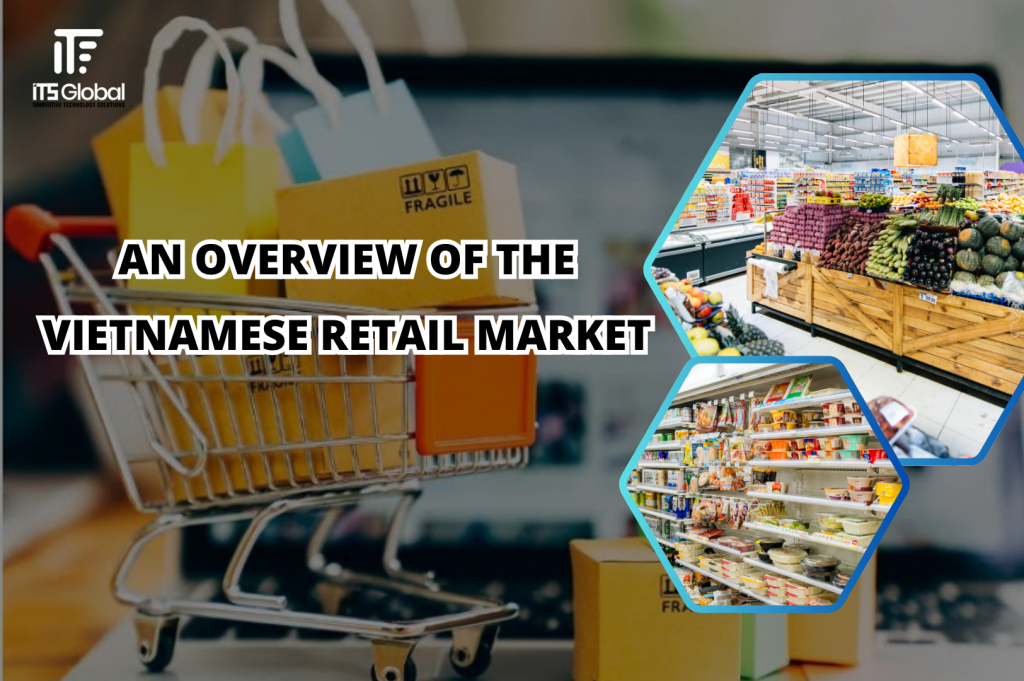
1.Key Trends Shaping Vietnam’s Retail Market in 2025
Vietnam’s retail market is undergoing profound transformation, driven by rapid technological adoption and evolving consumer behavior. The following key trends are expected to shape the retail landscape in 2025:
Continued boom in e-commerce
With rising internet penetration and widespread smartphone usage, e-commerce will remain a primary growth engine of the retail sector. According to reports from the Vietnam News Agency, the target for e-commerce revenue to account for 10% of total retail sales by 2025 is well within reach. This creates significant opportunities for IT and technology companies to develop platforms, solutions, and applications that support e-commerce operations.
The rise of omnichannel retail
Consumers increasingly demand seamless shopping experiences that integrate online and offline channels. Retailers must invest in omnichannel systems to meet these expectations. This trend opens up strong opportunities for technology providers to deliver integrated solutions, data management platforms, and process automation tools that help retailers optimize omnichannel operations.
Greater focus on customer experience
In an increasingly competitive environment, enhancing customer experience has become a critical differentiator. Retailers are prioritizing personalized experiences and leveraging AI and Big Data to analyze customer behavior and purchasing patterns, enabling more targeted and effective marketing strategies.
Growing share of online retail channels
According to Kantar, the share of online retail channels is projected to increase by 3% in urban areas and 1% in rural areas in 2025. This shift requires retailers to invest heavily in technology infrastructure, data security, and large-scale data processing capabilities to support sustained growth in online sales.
2. Challenges Facing Vietnam’s Retail Industry
Alongside its attractive growth opportunities, Vietnam’s retail market also presents a number of significant challenges for businesses.
2.1.Intensifying Competition
Vietnam’s retail sector is attracting an increasing number of domestic and international players, resulting in fierce competition across multiple dimensions:
Pricing pressure: Retailers face strong pressure to reduce prices in order to attract customers while still maintaining profitability. The entry of numerous competitors—particularly foreign retailers—requires businesses to optimize costs and improve operational efficiency to remain competitive.
Product differentiation: With a rapidly expanding range of products, from locally produced goods to imported merchandise, Vietnamese consumers now have more choices than ever. This forces retailers to continuously innovate, keep pace with market trends, and meet rising consumer expectations. The adoption of technology in both production and commercial operations has become a critical factor in strengthening competitiveness.
Service quality: Service excellence is a key differentiator in retaining customers. Consumers are increasingly focused on the overall shopping experience, including store environment, convenience, and after-sales services. Retailers must invest in staff training, service quality enhancement, and customer care to build long-term loyalty.
2.3. Changing Consumer Behavior
Vietnamese consumers are becoming more tech-savvy, better informed, and more demanding in terms of shopping experience:
Shift toward online shopping: The rapid expansion of internet access and smartphone usage has fueled the growth of e-commerce. Consumers increasingly favor the convenience, speed, and product variety offered by online shopping platforms.
Higher expectations for quality and pricing: Consumers are more knowledgeable about products and services and are willing to pay for high-quality offerings with clear origin, safety assurances, and transparent pricing.
Demand for personalized shopping experiences: Customers expect tailored shopping journeys that align with their individual preferences and needs, pushing retailers to adopt personalization strategies supported by data and technology.
2.3. Digital Transformation Challenges
While digital transformation is an inevitable trend in retail, it also poses substantial challenges for businesses:
Technology investment requirements: Retailers must invest in modern IT infrastructure, including hardware, software, network systems, and cybersecurity, to support online operations and effective data management.
Workforce development: Companies need to train and develop digitally skilled talent, covering areas such as technology adoption, data analytics, and digital marketing. Fostering an innovation-driven mindset and adaptability to change is essential in an evolving business environment.
Operational process transformation: Digital transformation requires a comprehensive review and optimization of operating processes—from procurement and sales to customer service—in order to improve efficiency and reduce costs.
3. Opportunities
A Golden Opportunity for Vietnam’s Retail Sector: Capturing Trends to Achieve Breakthrough Growth
Vietnam’s retail market is gaining strong momentum, offering compelling opportunities for businesses that can anticipate trends and leverage market advantages effectively.
3.1. Untapped Potential in Rural Markets
Large population base with rising income: Rural areas account for approximately 70% of Vietnam’s population, with steadily increasing per capita income. This represents a vast and largely underpenetrated consumer market with diverse and evolving demand.
Opportunities for businesses: Retailers can expand distribution networks, develop sales channels tailored to rural characteristics, and offer products and services that meet the specific needs of rural consumers.
3.2. Development of New Retail Models
Convenience stores and mini supermarkets: Compact and convenient retail formats are expanding rapidly across Vietnam, particularly in urban and suburban areas, driven by demand for speed and accessibility.
Specialty retail: Retailers focusing on specific product categories or services—such as cosmetics, fashion, or home appliances—are also gaining strong consumer traction.
Opportunities for businesses: By investing in these emerging retail models, companies can move closer to end customers, differentiate their offerings, and drive higher sales performance.
3.3. Technology Adoption as a Growth Enabler
Artificial Intelligence (AI), Big Data, and the Internet of Things (IoT): The application of advanced technologies enables retailers to enhance operational efficiency, personalize customer experiences, and create innovative business models.
Opportunities for businesses: AI can be used to analyze customer behavior, forecast market demand, and optimize business strategies. Big Data supports more efficient inventory management, sales forecasting, and data-driven decision-making. IoT enables device connectivity, real-time data collection, and process automation across retail operations.
Conclusion
Vietnam’s retail industry is in a dynamic phase of development, where opportunities and challenges coexist. To succeed, businesses must adapt quickly to rapid changes in consumer behavior and technology. By capturing key trends, embracing innovation, and applying technology strategically, enterprises can unlock the significant growth potential of Vietnam’s retail market and achieve sustainable long-term success.
Partnering with ITS Global means more than adopting optimized technology solutions—it means unlocking a pathway to breakthrough growth.
We are at the forefront of Flutter Development and Hybrid App Development, delivering high-performance, cross-platform applications that scale with your business. Backed by deep expertise in SAP Consulting and ERP implementation, ITS Global also leads digital transformation (DX) initiatives for the logistics and F&B sectors, enabling enterprises to accelerate growth, optimize customer experience, and strengthen their market position.
Contact us today to receive tailored consulting and prepare your business for the next leap forward in the digital transformation era.
#FlutterDevelopment #HybridAppDevelopment #SAPConsulting #LogisticsSolutions #FBSolutions