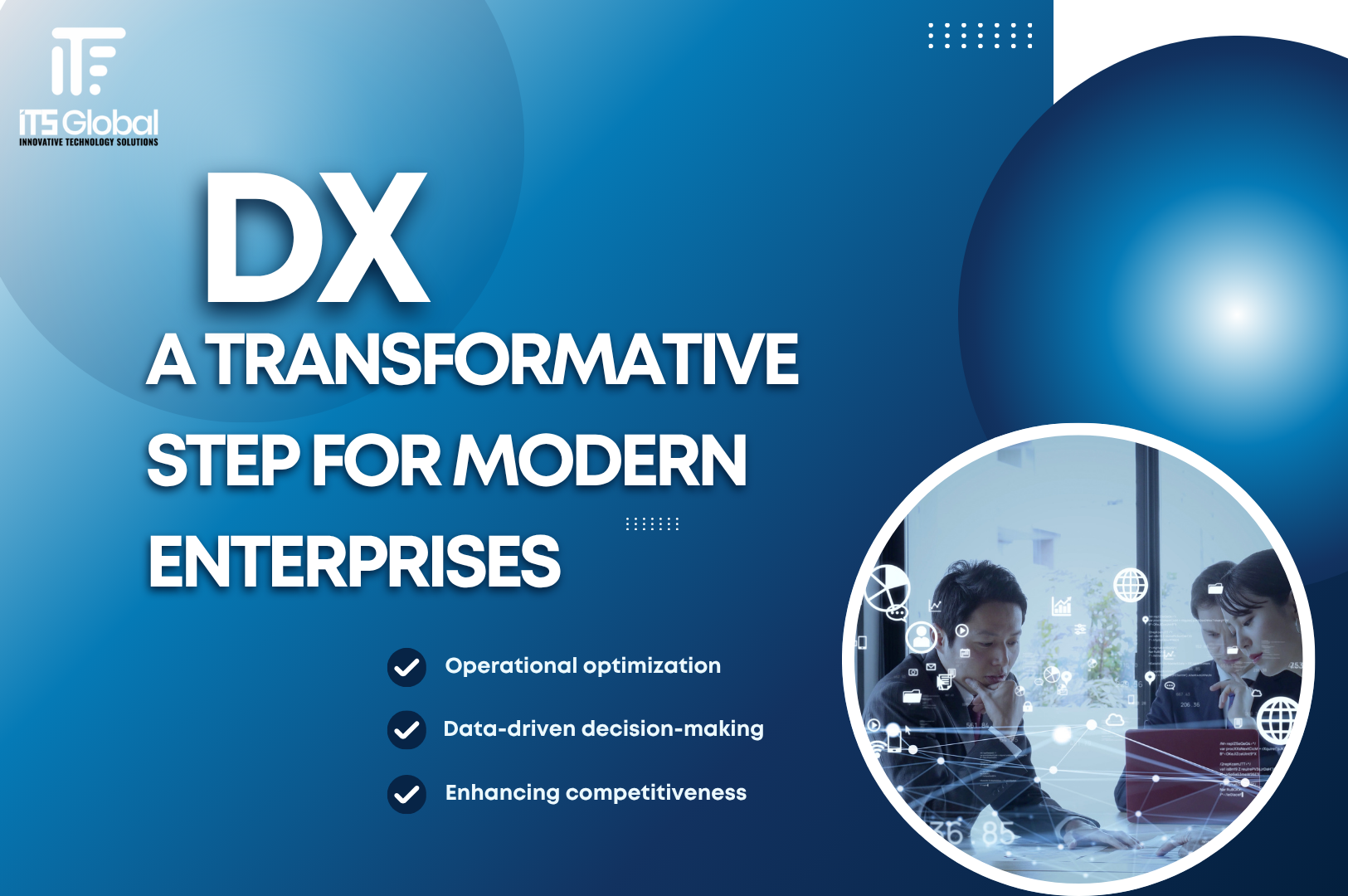
1. The Nature of Digital Transformation (DX): Restructuring to Create Real Competitive Advantage
One of the biggest misconceptions about digital transformation is viewing it as a technology project. In reality, if DX is approached as simply “buying software and deploying systems,” companies are essentially heading straight into the same trap as more than 70% of failed projects identified by McKinsey.
The core issue lies in this: technology does not create value on its own if it does not change how a business operates. When systems like ERP or CRM are implemented but existing processes remain unchanged, management thinking does not evolve, and data is not utilized in decision-making, the result is merely “digitizing inefficiency.” In such cases, costs increase while performance does not improve proportionally — a very common scenario in practice.
From the perspective of business owners and investors, DX should be correctly understood as a comprehensive restructuring of the operating model. This includes redesigning processes to eliminate bottlenecks, standardizing cross-departmental coordination, and most importantly, building an end-to-end data system that reflects business operations in real time.
When done properly, DX not only helps businesses “move faster” but also “operate more effectively.” Processing speed improves and errors are reduced, but the greater value lies in gaining stronger control over core elements such as costs, cash flow, and asset utilization efficiency. This forms the foundation for optimizing key financial metrics such as profit margins, capital turnover, and labor productivity.
Another aspect that many businesses underestimate is the role of DX in enhancing governance quality. When data is standardized and transparent, leadership no longer has to rely on delayed manual reports or intuition-based decisions. Instead, they can monitor business performance in real time, identify issues earlier, and respond more quickly to market changes. In a highly competitive environment, the speed and accuracy of decision-making are what create real differentiation.
From an investment perspective, this fundamental nature of DX carries even deeper implications. A business with a data-driven operating system, standardized processes, and scalability will always be valued higher. The reason is simple: lower operational risk, better control, and clearer growth potential. In contrast, businesses that rely heavily on individuals, lack data transparency, and operate based on experience tend to struggle with scaling and carry significant hidden risks.
Therefore, the right question is not “which technology should be implemented,” but rather: how should the business transform its operations so that technology becomes a lever for value creation? Only when this question is answered does DX truly become a strategic investment, rather than a technology expense with unclear returns.
2. The Three Pillars of DX from a Financial Value Creation Perspective
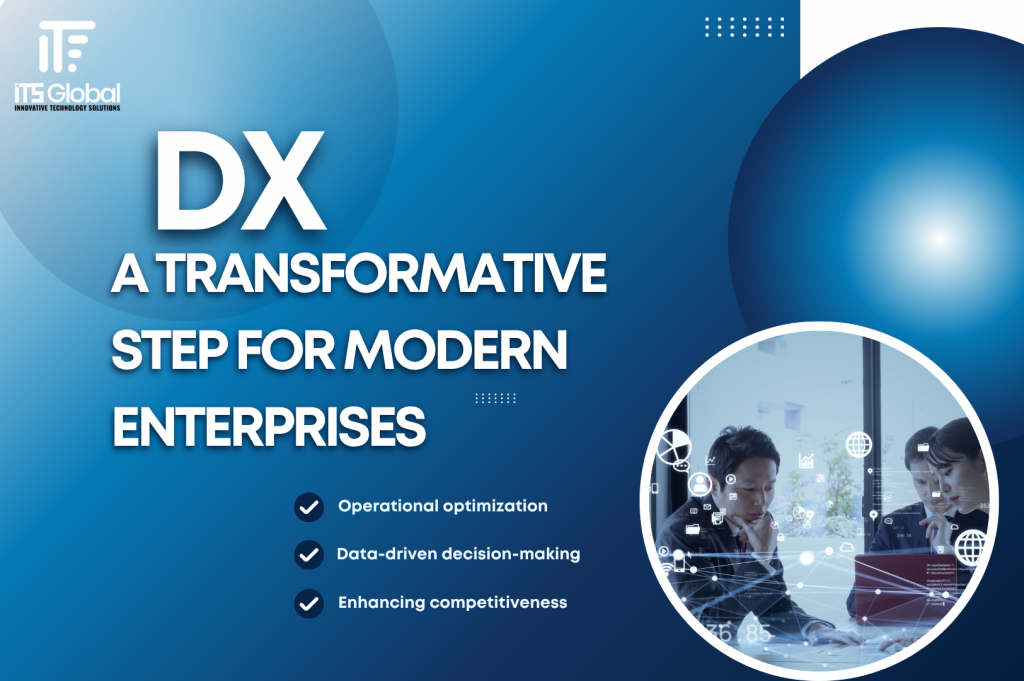
When viewed as an investment, the three pillars below are not merely steps in technology implementation—they are the key “levers” that directly impact costs, revenue, and enterprise valuation.
The first pillar, process digitization, serves as the foundation that enables businesses to systematically control their operations. Platforms such as ERP, CRM, and SCM do more than just manage data; more importantly, they create a seamless flow of information across departments. When financial, sales, inventory, and operational data are connected in real time, businesses are no longer “operating in the dark”—one of the primary causes of poor decision-making.
The financial value of this is evident. According to SAP and Deloitte, companies can reduce operating costs by 20–30% by eliminating manual tasks, minimizing errors, and optimizing processes. However, the deeper benefit lies in strengthening internal controls and reducing operational risks, especially as the business scales. An organization that operates on standardized processes and transparent data is less dependent on individuals, thereby significantly lowering the risk of disruption.
A point often overlooked is the impact of digitization on valuation. When data is “clean,” traceable, and verifiable, the quality of financial reporting improves, and investor confidence increases. This makes it easier for businesses to raise capital, execute M&A transactions, and often achieve higher valuations due to reduced information risk. In other words, a well-implemented ERP system not only enhances operational efficiency but also directly increases enterprise value in the capital markets.
If digitization is the foundation, then automation is the lever that enables businesses to grow without a proportional increase in costs. This is the stage where DX begins to deliver the most immediate and tangible financial impact. Technologies such as RPA, workflow automation, and AI allow organizations to handle large volumes of repetitive tasks with high speed and consistent accuracy, while reducing dependence on operational personnel.
According to Gartner, automation can reduce the time required to process repetitive tasks by up to 80% and deliver a payback period of just 6–12 months. For investors, this is an extremely important signal, as it reflects the ability to scale revenue without a corresponding increase in costs. When a business can handle twice the order volume without increasing headcount, or use AI chatbots to replace a significant portion of customer service tasks, profit margins can improve substantially.
This impact goes beyond cost reduction. Automation also enhances labor productivity, often measured by revenue per employee, while ensuring more consistent output quality compared to manual processes. This is a critical factor in sustaining growth as the organization scales.
At the highest level, the third pillar—data-driven decision-making—is what truly creates long-term competitive advantage. At this stage, DX is no longer just about optimizing operations; it becomes a strategic tool that enables businesses to shape direction and stay ahead of the market. Systems such as BI, data warehouses, and AI/ML allow organizations not only to understand what has happened, but also to predict what will happen next.
According to IDC, companies that effectively leverage data can achieve 23% higher revenue growth and make decisions five times faster. In a volatile business environment, decision-making speed is a key competitive advantage. A company capable of real-time data analysis can adjust pricing, optimize inventory, or shift marketing strategies as soon as market signals change.
For investors, this signals a business that not only reacts to the market but can proactively lead it. Strong data capabilities help reduce inventory risk, optimize marketing spend by improving ROAS, and increase customer lifetime value (LTV). When these factors are optimized simultaneously, the business builds a “moat”—a sustainable competitive advantage that competitors will find difficult to replicate in the short term.
3. Technology Is Not the Core—System Architecture Is the Decisive Factor
In many digital transformation projects, businesses tend to spend most of their time choosing technologies: which cloud to use, how to implement AI, or whether to adopt low-code platforms. However, from a strategic perspective, these are not the most important questions. Technology evolves rapidly, but system architecture—how components are designed, connected, and operate together—is what ultimately determines a company’s long-term scalability and success.
Technologies such as Cloud, AI, APIs, and low-code are, in essence, just tools. When placed within a poorly designed architecture, they can still result in systems that are bulky, rigid, and costly to scale. Conversely, with the same technologies but organized under a well-designed architecture, businesses can optimize costs, accelerate deployment, and maintain adaptability in a constantly changing environment.
The “Composable Enterprise” trend highlighted by Gartner clearly reflects this shift. Instead of building large, monolithic, tightly coupled systems, organizations should design modular architectures—where each component serves a specific function and can be independently upgraded, replaced, or scaled without disrupting the entire system. This approach is similar to building with Lego blocks: flexible, easy to modify, and quick to reconfigure when needed.
From an investor’s perspective, system architecture is not merely a technical concern—it directly impacts capital efficiency. A rigid system significantly increases the “cost of change.” Every time a company wants to launch a new product, integrate with partners, or adjust processes, it requires substantial time, cost, and may even disrupt ongoing operations. This slows down innovation and reduces the ability to capture market opportunities.
In contrast, a flexible architecture enables rapid experimentation at low cost. New models can be deployed on a small scale (pilot), validated through A/B testing, and then scaled once proven effective. This approach not only reduces investment risk but also allows businesses to continuously refine their operating models based on real-world data.
In a fast-changing market, competitive advantage no longer belongs to the company with the best technology, but to the one that adapts the fastest. And that adaptability depends heavily on how systems are designed from the outset.
For investors, this is a critical signal: companies with flexible architectures tend to have lower innovation costs, faster growth, and a stronger ability to sustain competitive advantage over the long term.
4. Common Pitfalls: Why Many Businesses Fail in Digital Transformation
Most digital transformation initiatives do not fail because of weak technology, but because of flawed approaches from the outset. The most common mistake is focusing on “buying systems” instead of changing how the business operates. When a company invests in ERP, CRM, or AI platforms with the expectation that these tools will automatically improve efficiency—without adjusting processes or training people—the result is often superficial usage or even complete abandonment of the system.
Another systemic issue is retaining old processes while merely “wrapping” them with a layer of technology. This creates a dangerous situation: processes that were already inefficient become more complex, harder to control, and more costly. Instead of optimizing costs, businesses may actually increase operational risks, especially as they scale.
A lack of a clear data strategy is also a critical bottleneck. Many companies invest in systems and accumulate large volumes of data but lack the analytical capabilities or fail to identify which data truly matters. As a result, data becomes a “dead asset”—it generates no insights and does not support decision-making. From an investor’s perspective, this signals that the business has not yet unlocked the core value of DX.
Finally, leadership plays a decisive role. Digital transformation inherently involves change, and change inevitably creates resistance within an organization. Without strong commitment from leadership—across strategy, resources, and prioritization—DX initiatives can easily stall when encountering initial challenges. This is why many DX efforts remain at the experimental stage and fail to scale into real value.
5. Implementing DX Effectively: The Right Mindset to Optimize Investment Returns
An effective digital transformation strategy always starts with a business problem, not technology. Companies need to clearly define specific objectives such as reducing inventory levels, improving capital turnover, increasing conversion rates, or enhancing customer experience. Once the problem is well-defined, selecting technologies and solutions becomes more precise and measurable in terms of impact.
Rather than deploying at scale from the beginning, a more effective approach is to proceed in phases: start with small-scale pilots, evaluate the results, and then scale up. This method allows businesses to control risks, avoid scattered investments, and adjust strategies based on real data. It is also the approach widely adopted by leading technology companies to optimize innovation outcomes.
Prioritizing “quick wins” is crucial in the early stages. Initiatives such as process automation using RPA or building data dashboards often require relatively low investment, can be implemented quickly, and deliver clear results. When businesses see tangible outcomes in a short time, confidence in DX increases, creating momentum for further investment in larger initiatives.
However, the most decisive long-term factor lies in people. A company can only truly achieve digital transformation when employees at all levels are capable of understanding, using, and making decisions based on data. This requires not only skill development but also fostering a culture where data becomes the foundation of all activities. At that point, DX is no longer a standalone project—it becomes embedded in the organization’s operational DNA.
6. Conclusion – DX as a Test of Management Capability
At this stage, digital transformation is no longer an “added advantage” but has become a direct measure of a company’s management capability. With the same technological foundation, some businesses achieve exceptional growth, while others fail to extract meaningful value. The difference lies not in the tools, but in how the organization operates and makes decisions.
Companies that implement DX effectively typically have streamlined processes, transparent data, and fast decision-making capabilities. More importantly, they are able to scale without a proportional increase in costs. This is the hallmark of a scalable operating model—the core driver of sustainable growth.
In contrast, businesses that approach DX superficially often end up with complex yet ineffective systems, high costs, and slow responses to market changes. When the business environment shifts, they struggle to adapt and gradually lose their competitive edge.
From an investor’s perspective, DX can be seen as a “quality indicator.” Companies that execute DX in a structured and disciplined manner are often associated with strong governance, long-term thinking, and sustainable growth potential—key factors in evaluating long-term value and valuation.
On the other hand, companies that lag in digital transformation do not just fall behind in technology; they fall behind in operational models and strategic thinking. In a rapidly changing market, this gap will continue to widen and will be difficult to close in the short term.
Partnering with ITS Global means more than adopting optimized technology solutions—it means unlocking a pathway to breakthrough growth.
We are at the forefront of Flutter Development and Hybrid App Development, delivering high-performance, cross-platform applications that scale with your business. Backed by deep expertise in SAP Consulting and ERP implementation, ITS Global also leads digital transformation (DX) initiatives for the logistics and F&B sectors, enabling enterprises to accelerate growth, optimize customer experience, and strengthen their market position.
Contact us today to receive tailored consulting and prepare your business for the next leap forward in the digital transformation era.
#FlutterDevelopment #HybridAppDevelopment #SAPConsulting #LogisticsSolutions #FBSolutions