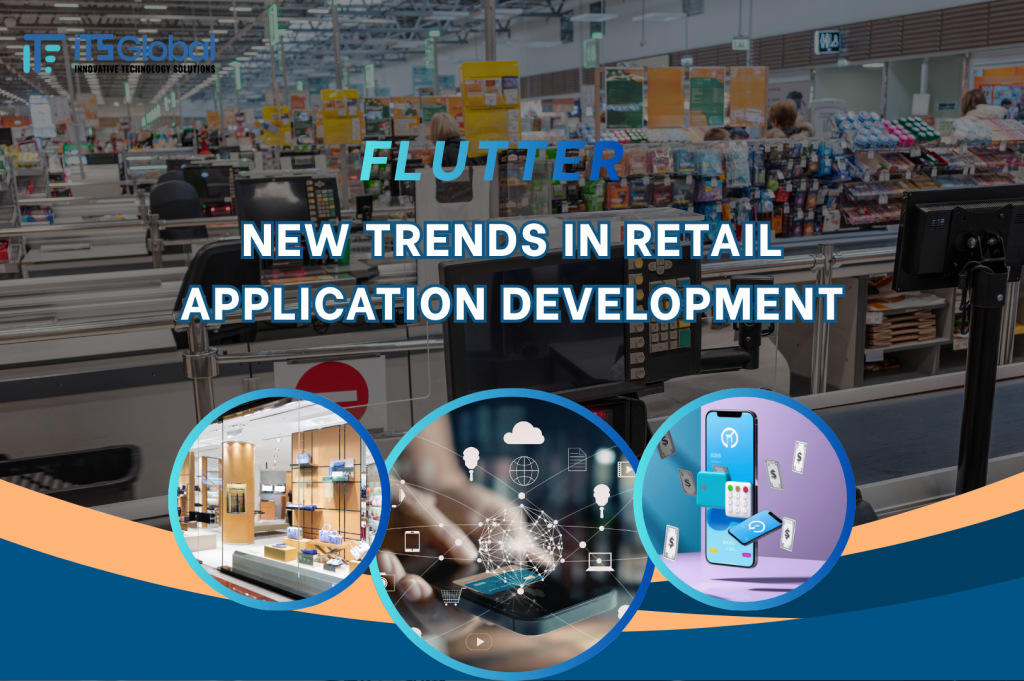
1. What is Flutter in the context of modern retail?
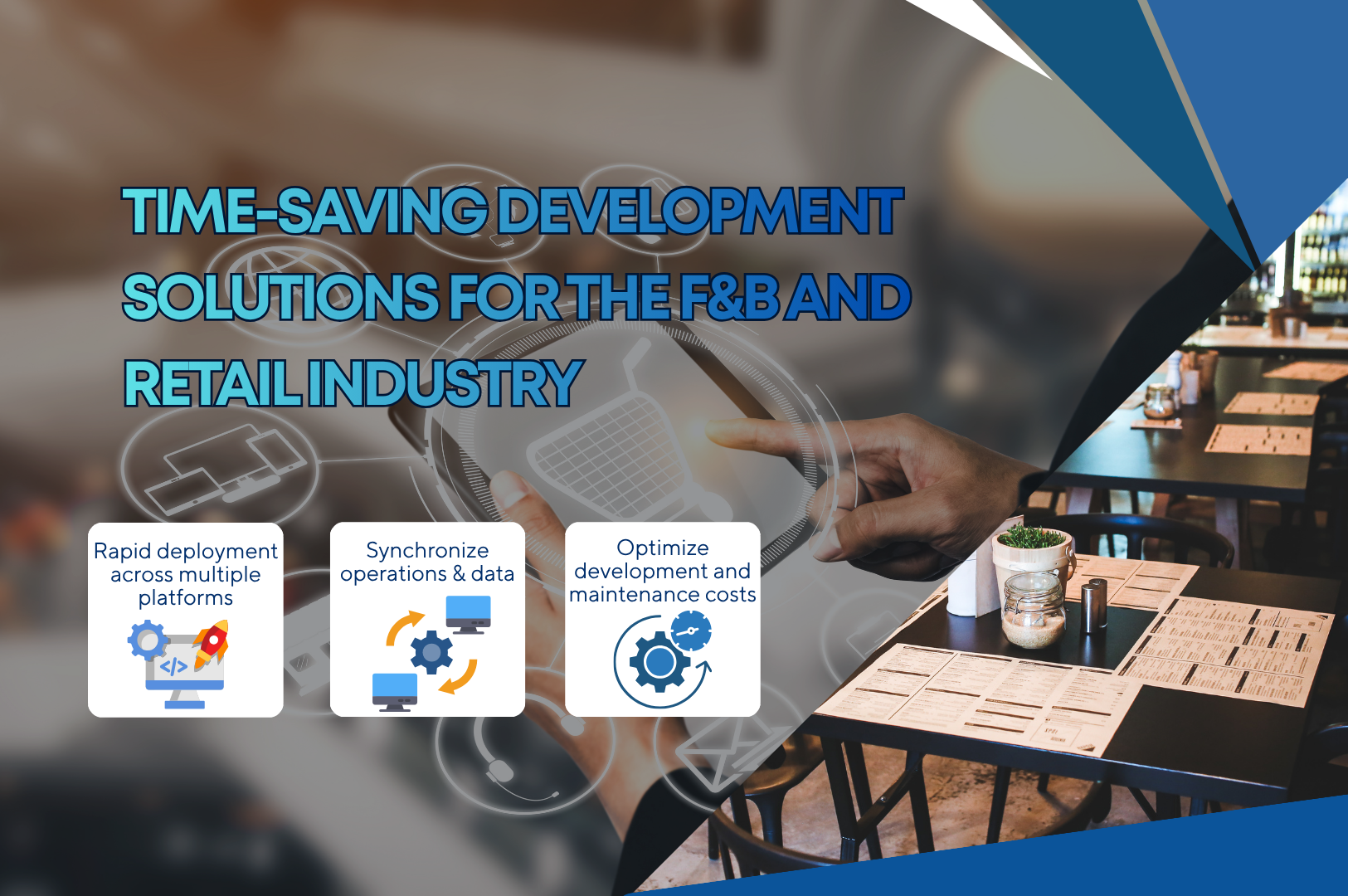
In the context of modern retail, Flutter should not be viewed merely as a “write once, run on multiple platforms” framework. While this understanding is technically correct, it does not fully capture the value Flutter brings when deployed in large-scale retail systems. In practice, Flutter functions as a unified frontend layer—a consistent interface layer across the entire application ecosystem. With its own rendering engine, Flutter has full control over how the UI is displayed, without relying on browsers or native UI components of each platform. At the same time, its unified runtime using the Dart language ensures consistent logic execution, whether the application runs on mobile, web, POS systems, or in-store kiosks.
This characteristic provides a significant advantage for retail businesses, where user experience must remain consistent across multiple touchpoints. Instead of handling platform-specific differences as in traditional approaches, Flutter enables the development of a unified UI/UX system while allowing most business logic to be reused. This not only reduces bugs during development but also significantly simplifies system maintenance and scalability. More importantly, as systems grow in scale, Flutter’s value extends beyond cost efficiency to reducing the overall complexity of frontend architecture—an essential factor for ensuring long-term, sustainable system growth.
2. Optimal Architecture: Flutter + BFF + Microservices
In real-world implementations, Flutter only reaches its full potential when placed within an appropriate system architecture—most notably a combination of Flutter, BFF (Backend for Frontend), and microservices. In this model, Flutter applications do not communicate directly with individual microservices. Instead, they go through an intermediary layer—the BFF—before passing through an API Gateway to reach backend services. This structure clearly separates the frontend from the complex backend system, while also introducing a dedicated data orchestration layer tailored to each type of client.
The role of BFF is especially critical in the retail context, where different applications such as mobile, web, and POS each have distinct data requirements and presentation needs. Rather than having the frontend handle multiple API calls and data aggregation, the BFF takes on this responsibility by consolidating data from various microservices, processing it, and returning it in the exact format required by each client. As a result, the number of API calls from the application is significantly reduced, leading to improved response times and a better user experience.
Conversely, if BFF is omitted and Flutter communicates directly with microservices, the system will quickly encounter several issues. The increased number of requests makes performance harder to manage, while pushing data processing logic to the client side increases complexity and the risk of errors. This becomes particularly problematic as the system scales and the number of services grows. Therefore, in large-scale retail systems, BFF is no longer just an architectural optimization—it becomes an almost essential component to ensure performance, scalability, and overall system stability.
3. State Management & Data Flow – The Key Determinants of Performance
In retail systems, where data volumes are large and continuously updated in real time, application performance depends not only on frontend technology but also on how state is managed and data flow is structured. A typical retail application must handle multiple types of data simultaneously, including product catalogs, inventory, and pricing, along with user states such as shopping carts, payments, and purchase history.
As data volume and user interactions grow, the absence of a well-designed state management mechanism can quickly lead to performance degradation, loss of control, and increased errors.In practice, poor state management not only impacts user experience but also significantly increases maintenance costs. Applications may suffer from lag due to inefficient UI updates, while logic becomes tangled when multiple components depend on the same data source. Additionally, system scalability becomes challenging due to the lack of clear separation between layers. This is a common issue in Flutter projects where development teams focus heavily on UI while overlooking data flow design from the outset.
To address these challenges, organizations often adopt modern approaches such as using dedicated state management solutions (e.g., Riverpod) to ensure clear and testable state control. Furthermore, implementing structured architectures like Clean Architecture helps separate the presentation, domain, and data layers, improving scalability and reducing interdependencies between components. In addition, caching strategies combined with data synchronization mechanisms when connectivity is available play a crucial role in enhancing performance and maintaining data consistency.
The key takeaway is that Flutter’s performance does not primarily depend on its UI rendering capabilities, but rather on how effectively the system is designed to process and manage data flow. A well-structured data flow enables applications to run smoothly, scale efficiently, and remain stable even as the system grows in size and complexity.
4. Flutter – The Touchpoint for Implementing AI & Omnichannel
In the modern retail ecosystem, Flutter is not where complex AI models are directly processed, but it serves as a critical touchpoint where AI delivers real value to users. In other words, if backend systems and AI platforms are the “brain,” then Flutter is the “interface” that transforms data and algorithms into tangible, intuitive experiences that directly influence customer behavior.
AI Implementation Approaches in Flutter Systems
Depending on business needs and use cases, AI can be implemented in two primary ways, each playing a distinct role in optimizing user experience.
On-device AI – Processing on the Device
With this approach, AI models (e.g., using TensorFlow Lite) run directly on the user’s device. The key advantage is fast processing speed without relying on network connectivity, while also ensuring data privacy and security. This is particularly useful in scenarios requiring instant responses, such as product recognition or real-time recommendations within a store environment.
Cloud AI – Processing on the Cloud
In contrast, Cloud AI leverages the power of platforms such as OpenAI or Vertex AI to handle more complex tasks. With strong computational capabilities and access to large datasets, this approach enables deep personalization, such as analyzing shopping behavior, predicting demand, or building intelligent real-time recommendation systems. However, it depends on network connectivity and must be optimized to ensure low latency.
Integration with Modern Backend Architecture
To fully realize the value of AI, Flutter must be tightly integrated with backend systems through mechanisms such as real-time data synchronization, event-driven architecture, and data analytics pipelines. These components ensure that data is continuously updated and that AI models can respond quickly to user behavior.
Real-World Applications in Retail
When implemented effectively, the combination of Flutter and AI can deliver significant value in retail. Common use cases include in-app product recommendation chatbots, behavior-based recommendation systems, and full customer journey personalization. Additionally, Flutter enables a consistent experience across both online and offline channels, ensuring a seamless user experience regardless of the touchpoint.
Key Takeaway
It is important to emphasize that Flutter does not compete with AI platforms; rather, it acts as the interface layer where AI, data, and user behavior converge into a complete experience. This is the key factor that enables businesses to move from simply “having AI” to actually “creating value from AI” in real-world operations.
5. Flutter and the Omnichannel Strategy
In the modern retail landscape, omnichannel is not simply about being present across multiple channels; its core lies in delivering a seamless experience across all customer touchpoints. Today’s users may start their shopping journey on one device, continue on another channel, and complete the transaction in an offline environment. If the experience is fragmented or inconsistent, businesses risk losing a critical competitive advantage.
Flutter plays a key role in enabling this strategy by providing a single codebase across multiple platforms. Instead of developing separately for mobile, web, or POS systems, Flutter allows businesses to build a unified interface layer, ensuring consistent UI/UX across the entire ecosystem. Moreover, with strong integration capabilities with real-time backend systems, Flutter ensures that data is continuously synchronized across channels, allowing users to always interact with the most up-to-date information.
A typical example can be seen in today’s shopping behavior: a customer selects products on a mobile app, then goes to a store to complete the payment via a POS system, and finally picks up the order at a self-service kiosk. When built with Flutter, this entire journey can share the same processing logic and deliver a consistent, uninterrupted experience across platforms. This is the key factor that turns omnichannel from a theoretical concept into a practical reality.
Conclusion
Flutter is not merely a framework that replaces React or traditional native solutions. In the context of modern retail, it is increasingly shaping its role as a unified frontend layer that connects user experiences across multiple platforms. At the same time, it serves as a critical bridge between AI systems and end users, transforming data and algorithms into tangible business value.
When implemented alongside appropriate architectural components such as BFF, microservices, and well-designed data management systems, Flutter not only accelerates development but also ensures consistency and scalability across the entire system. In the long term, it provides a solid foundation for retail businesses to adapt quickly to technological changes and to prepare for a future where customer experiences are driven by data and AI.
Partnering with ITS Global means more than adopting optimized technology solutions—it means unlocking a pathway to breakthrough growth.
We are at the forefront of Flutter Development and Hybrid App Development, delivering high-performance, cross-platform applications that scale with your business. Backed by deep expertise in SAP Consulting and ERP implementation, ITS Global also leads digital transformation (DX) initiatives for the logistics and F&B sectors, enabling enterprises to accelerate growth, optimize customer experience, and strengthen their market position.
Contact us today to receive tailored consulting and prepare your business for the next leap forward in the digital transformation era.
#FlutterDevelopment #HybridAppDevelopment #SAPConsulting #LogisticsSolutions #FBSolutions